John Steinbeck published his first novel, Cup of Gold, in 1929. Its release won him little attention, and his name would not ring familiar until the 1935 release of Tortilla Flat. His literary career from then on is well-known: Grapes of Wrath, Of Mice and Men. All cast a giant shadow over the 20th century's literary canon.
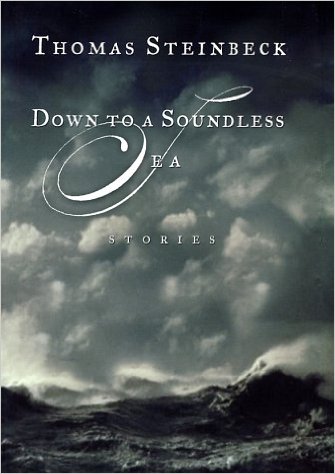
It's a shadow that also looms over Thomas Steinbeck, John's son. Owing much to his father's name, Steinbeck's Down to a Soundless Sea will not struggle to be noticed. Nonetheless, this promising debut is quite capable of standing on its own merits.
Published on the centennial of his father's birth, Steinbeck's book is filled with wonderfully written stories about human toil and the search for love in a hard world. His pieces do bear some resemblance to his father's, in that the land (his father's beloved California) and human vulnerability are at the core of both. But Thomas Steinbeck stresses the metaphoric in a gritty, rich poetic prose style that reveals him to be less interested than his father in providing a tendentious social barometer.
Thomas Steinbeck is also interested in the mystical, and many of these stories are laced with the fantastical intrusion upon the "real", producing a motley crowd of extraordinary characters whose emotions and fragility remain all too human.
His distinct style, and the "man against nature" subject matter of many of the tales, saddles him closer to Cormac McCarthy and E. Annie Proulx. Thomas Steinbeck clearly doesn't want to ape John's work, but his talent with language shows he's worthy of his father's pen.